


British Values
In accordance with The Department for Education we aim to actively promote British values in schools to ensure young people leave school prepared for life in modern Britain. Pupils are encouraged to regard people of all faiths, races and cultures with respect and tolerance and understand that while different people may hold different views about what is ‘right’ and ‘wrong’, all people living in England are subject to its law. It follows the policies outlined by the governing body regarding equal opportunities, which guarantee that there will be no discrimination against any individual or group, regardless of faith, ethnicity, gender, sexuality, political or financial status, or similar. “We want every school to promote the basic British Values of democracy, the rule of law, individual liberty, and mutual respect and tolerance for those of different faiths and beliefs.” Lord Nash. St Mary Bourne Primary School promotes the fundamental British values of:
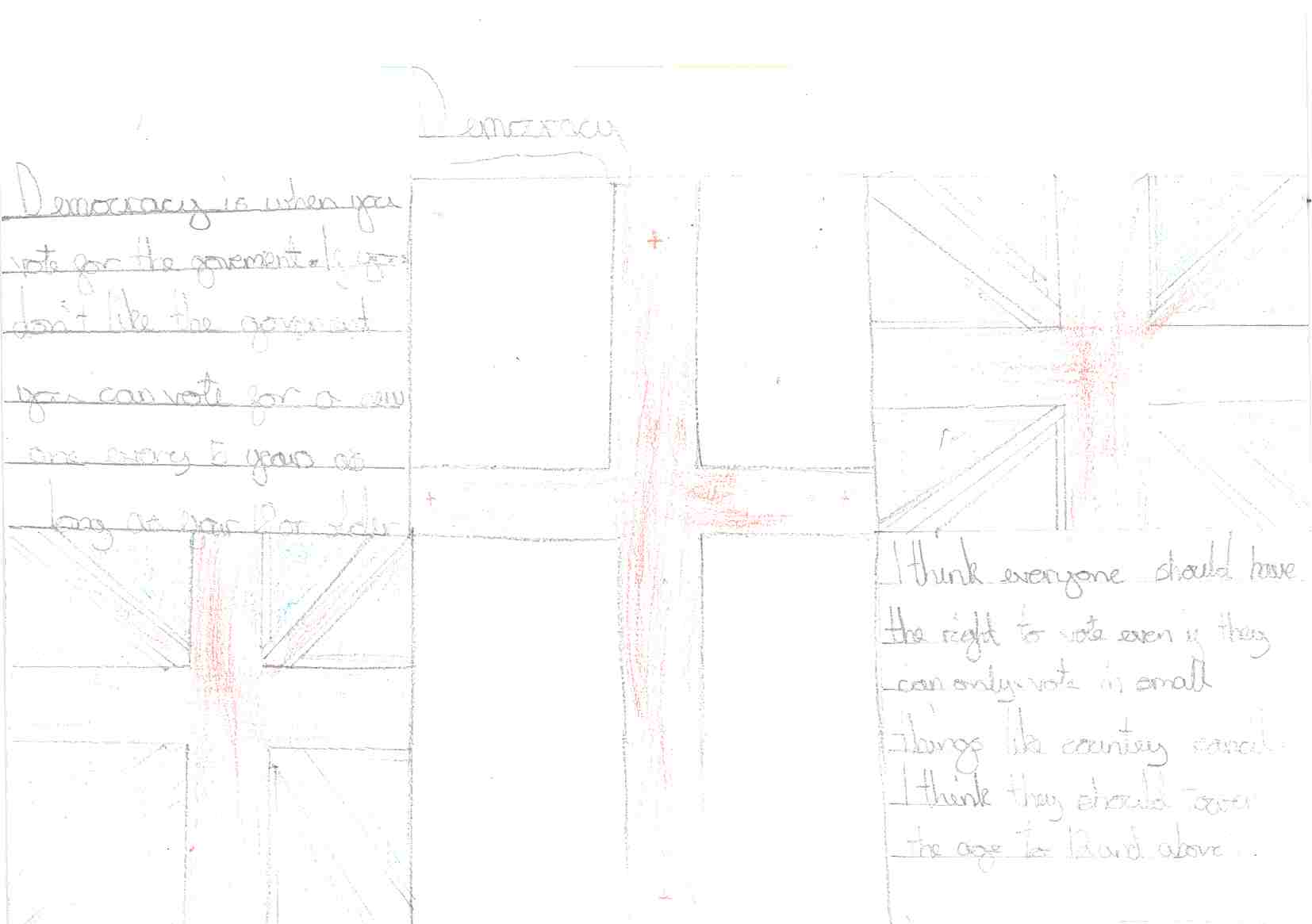
- Democracy
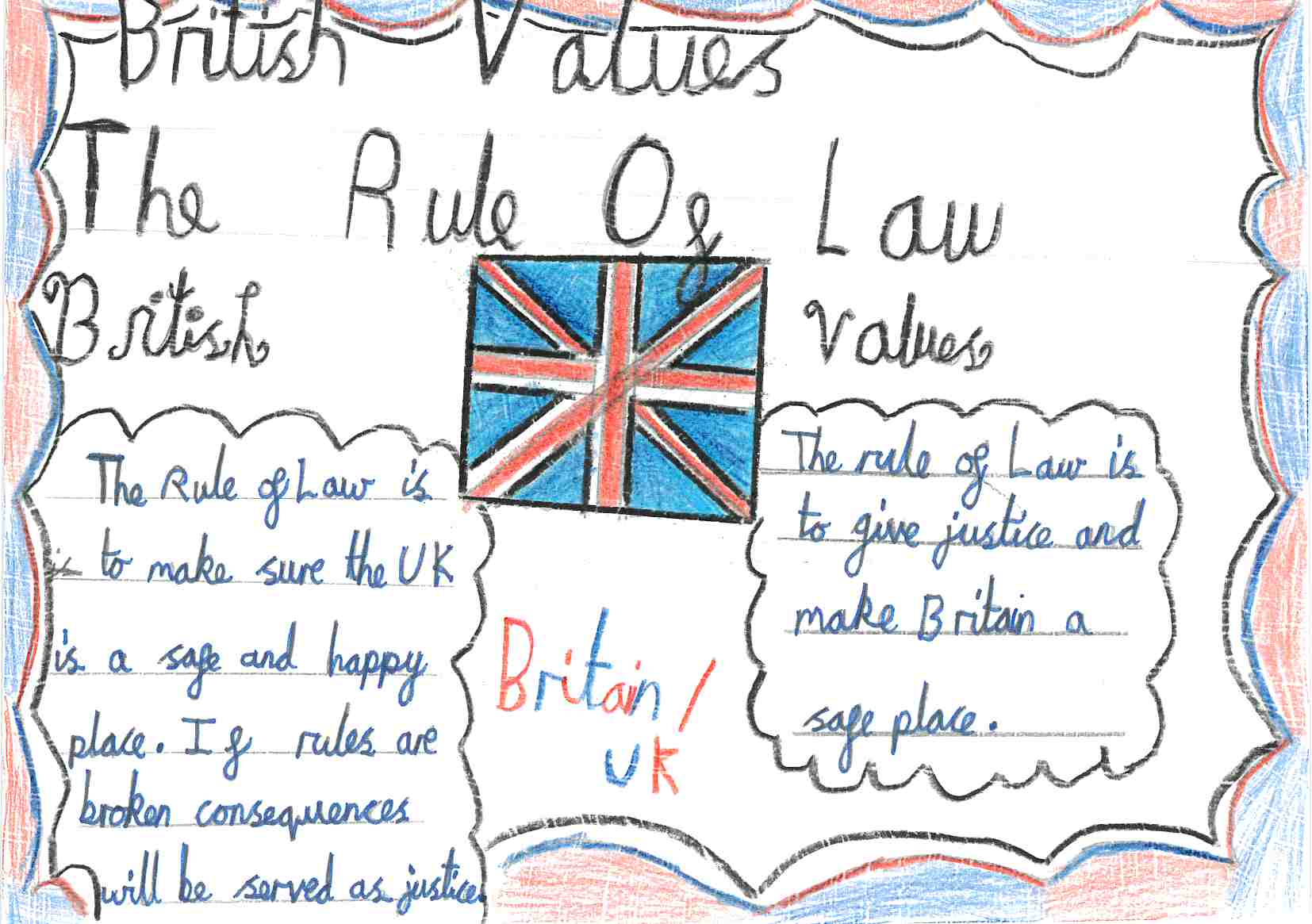
- The rule of law
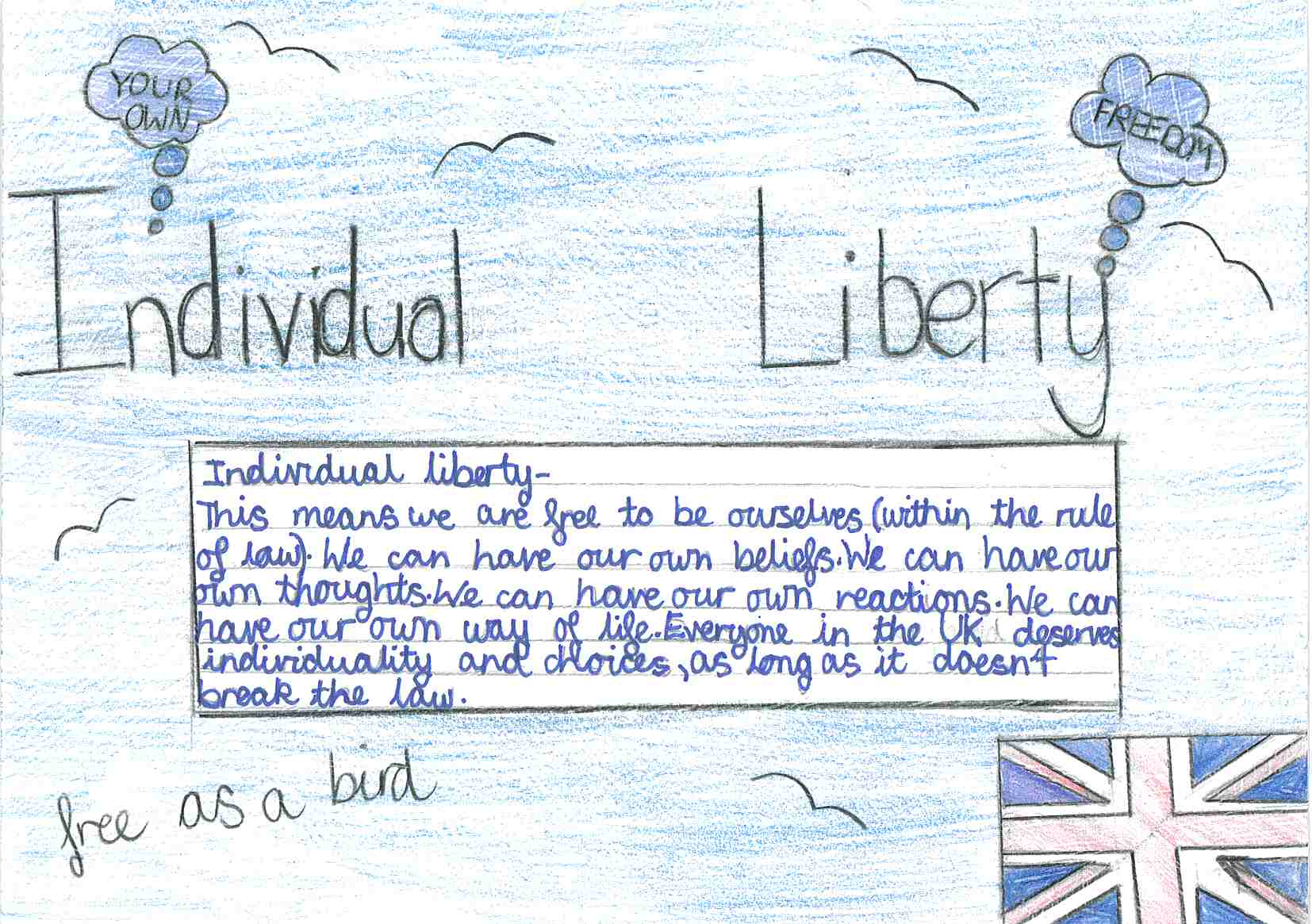
- Individual liberty
- Mutual respect
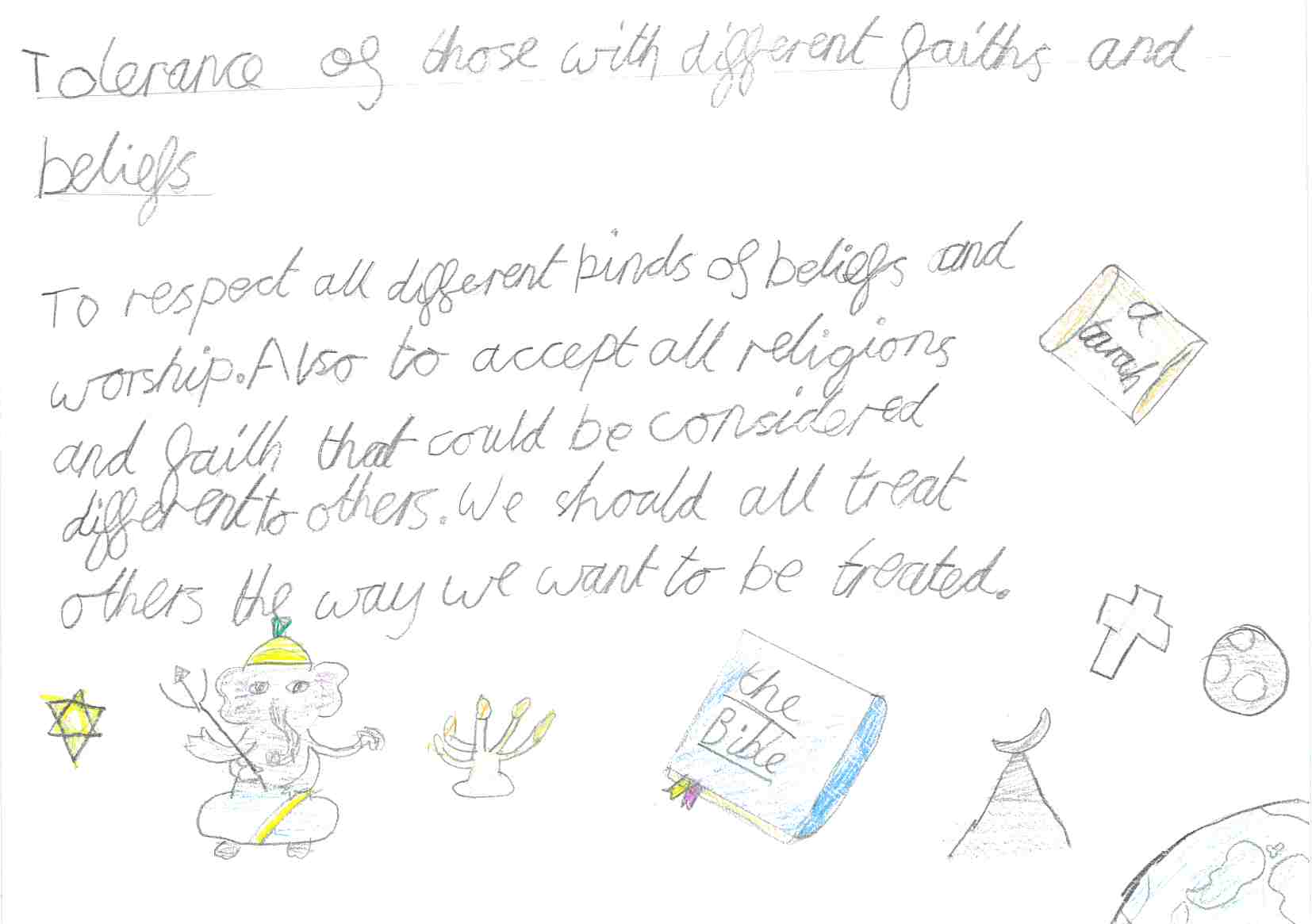
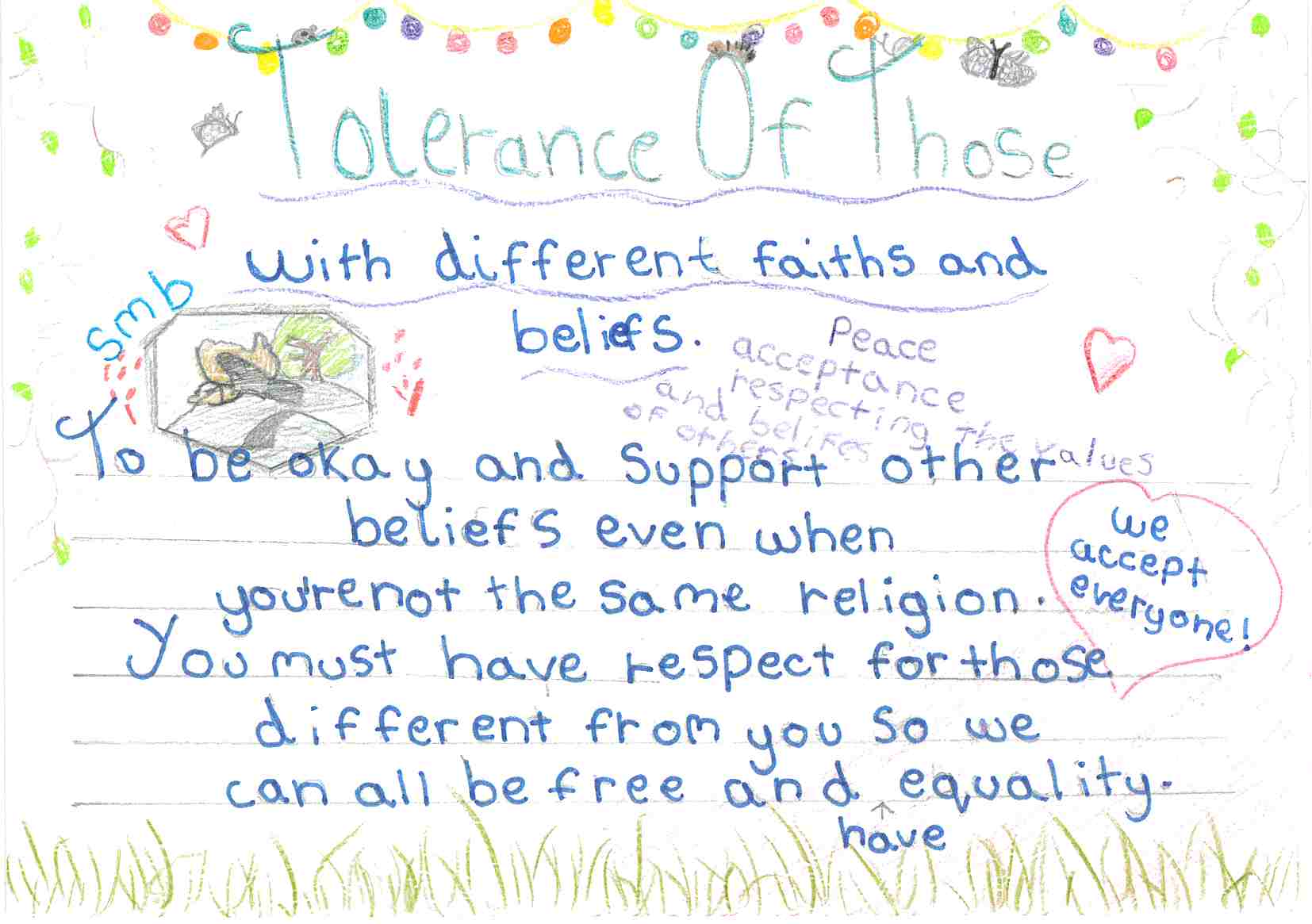
- Tolerance of those with different faiths and beliefs
To do this our children will develop;
- An understanding of how citizens can influence decision-making through the democratic process
- An understanding that the freedom to hold other faiths and beliefs is protected in law
- An acceptance that people having different faiths and beliefs to oneself (or having none) should be accepted and tolerated, and should not be the cause of discriminatory behaviour
- An understanding of the importance or identifying and combating discrimination
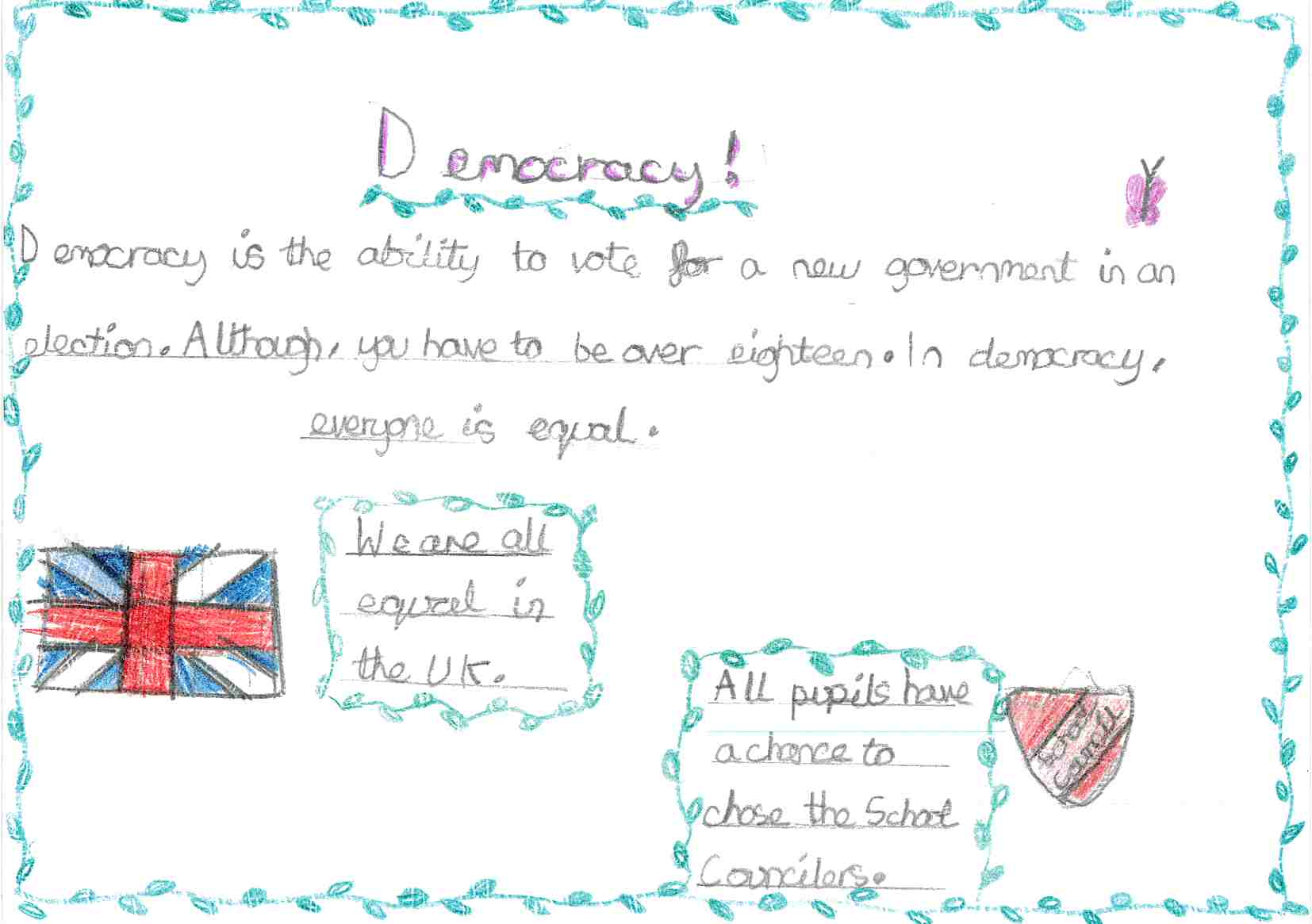
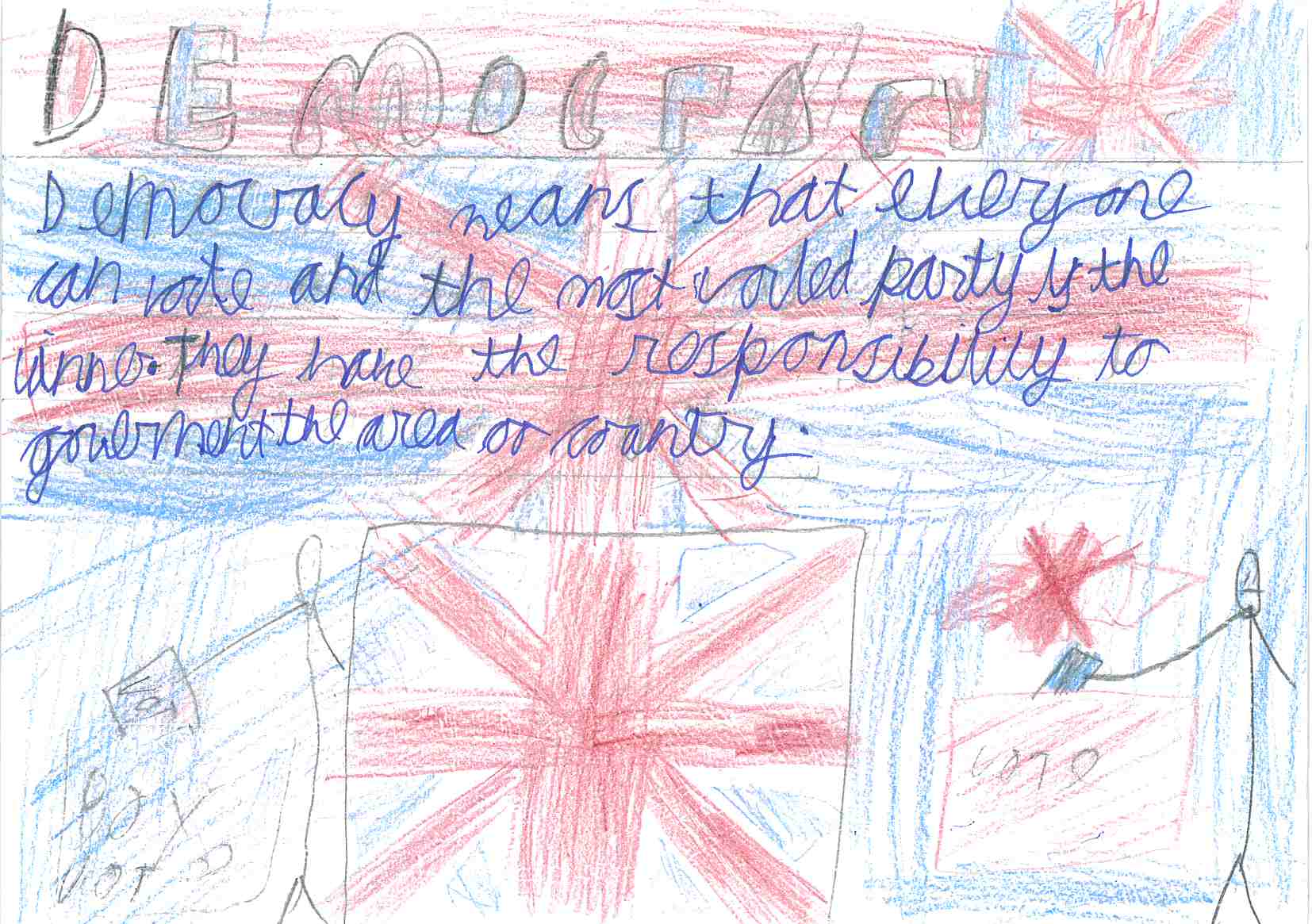
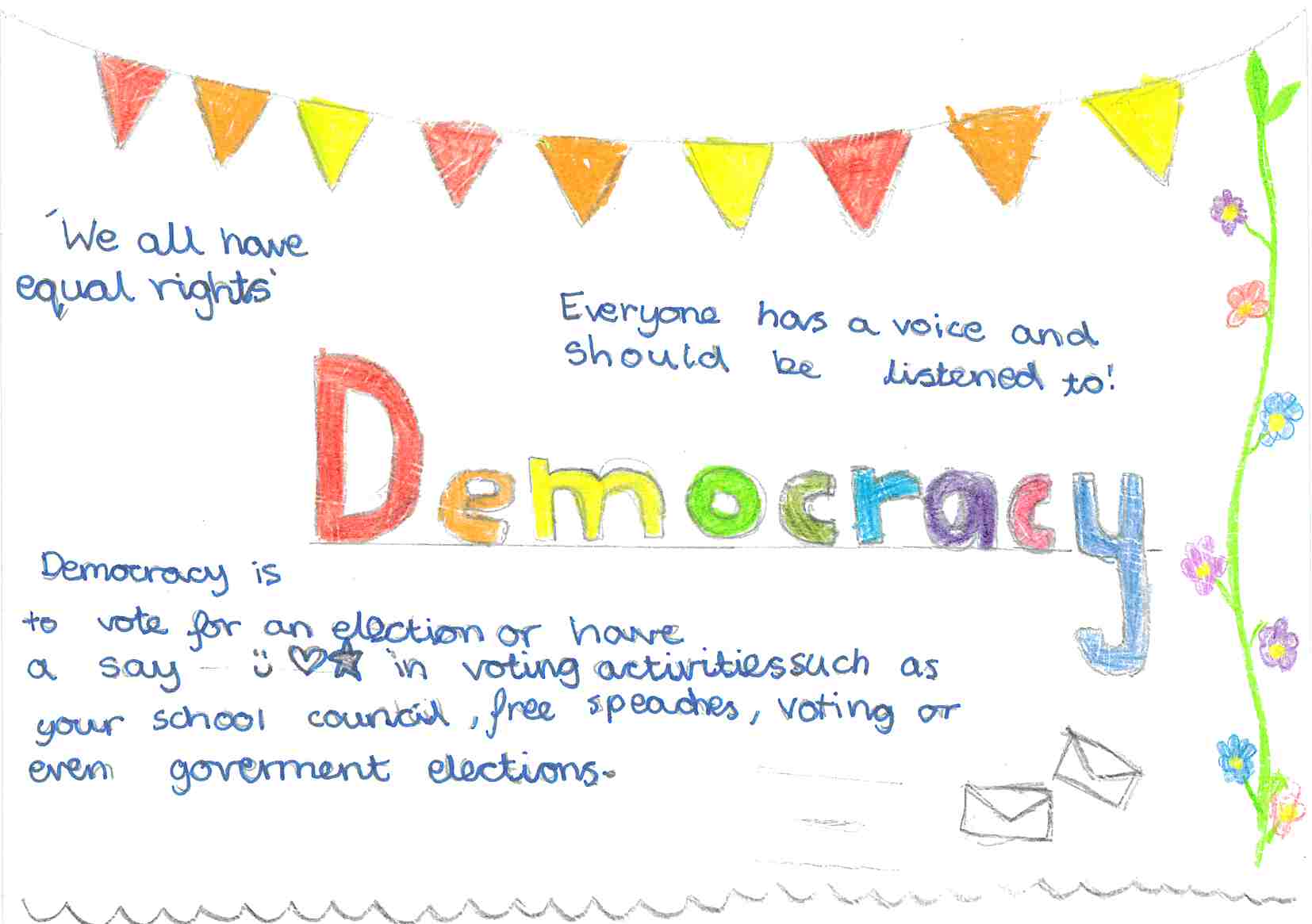
Democracy
Children are listened to and are taught to listen carefully to others. Children are taught to respect the right of individuals to have their voices and opinions heard. Each class develops their own class rules to ensure ownership and cooperation. The views of children are heard through our school council, PHSE lessons and questionnaires. The school council meets regularly and discuss issues raised in class or as a whole school. Every year each class votes for two school council members. Children will often be given opportunities to make decisions about things that affect them in school such as equipment they want purchased at playtime. We also use aspects of P4C in our teaching and children regularly debate issues both verbally and in writing. Our school behaviour policy also involves rewards, the choice of which pupils are involved with. Parents’ opinions are welcomed at St Mary Bourne Primary through methods such as questionnaires, Parent cafes, surveys at parents evenings and opportunities to comment on whole school matters.
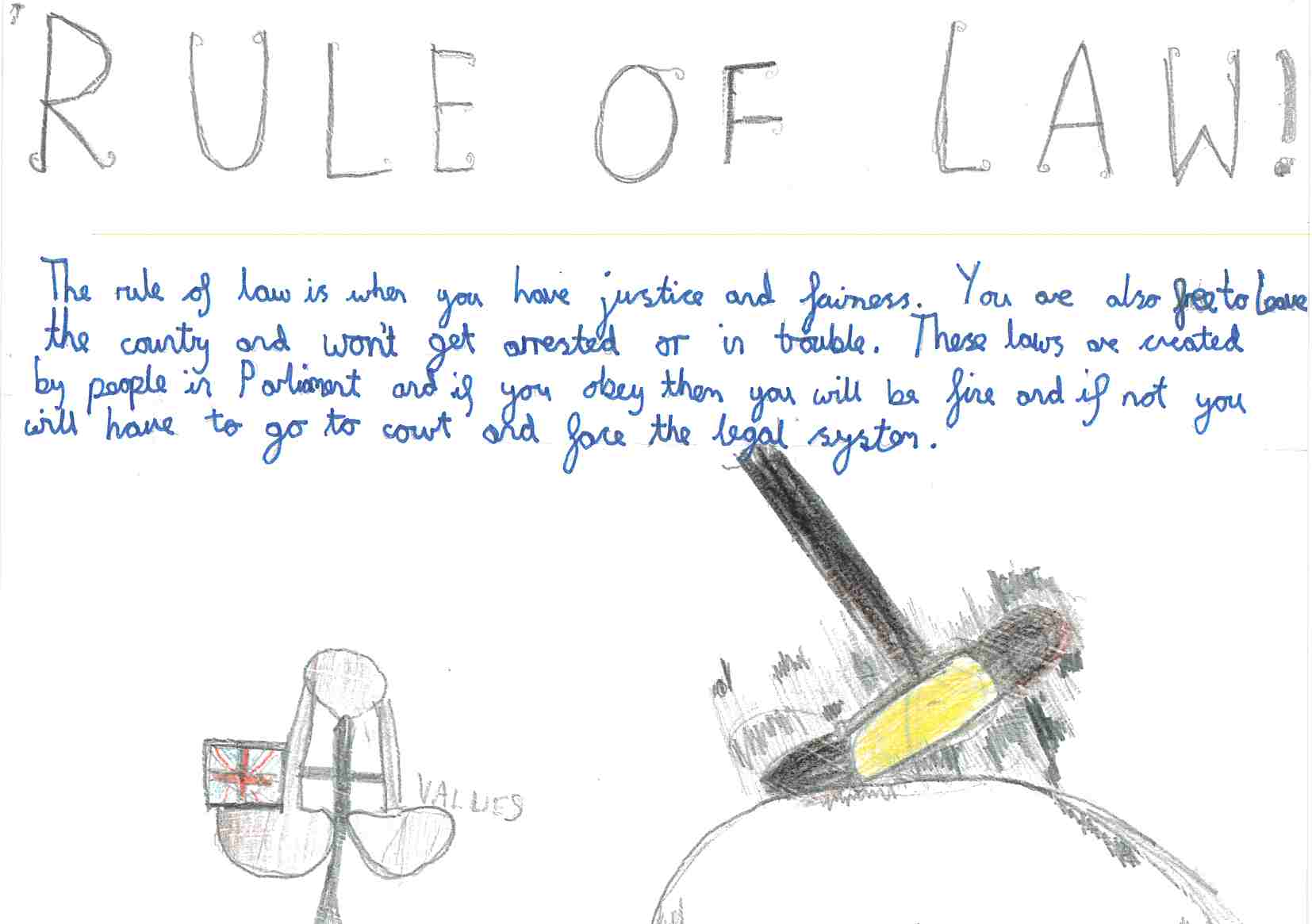
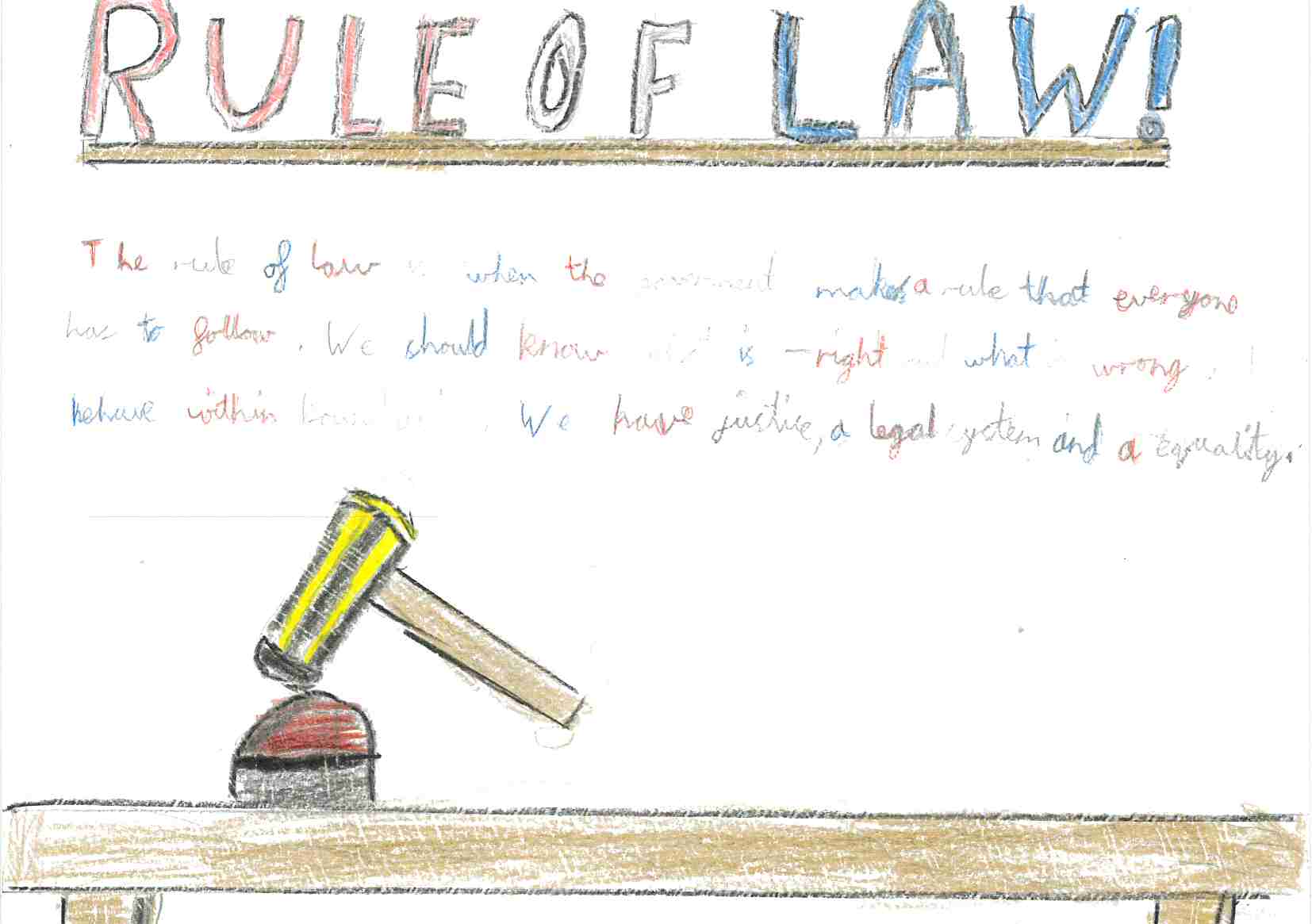
Rule of law
The importance of laws, whether they be those that govern the class, the school or the country are consistently reinforced throughout the school and behaviour expectations are reinforced through class and school assemblies. Pupils are taught from an early age the value of the school rules. At the start of the school year, each class discusses the school rules and class routines, principles that are clearly understood by all and seen to be necessary to ensure that every class member is able to learn in a safe and ordered environment, these rules are displayed in each class. Children are taught the value and the reason behind the rules and the laws, that they govern and protect us, the responsibility this involves and the consequences when laws are broken. Visits from authorities such as the Fire Service etc. are regular parts of our calendar and help reinforce this message. Bikeability lessons in Key Stage 2 enable children to understand the rules of the road and the potential dangers encountered should they break those rules.
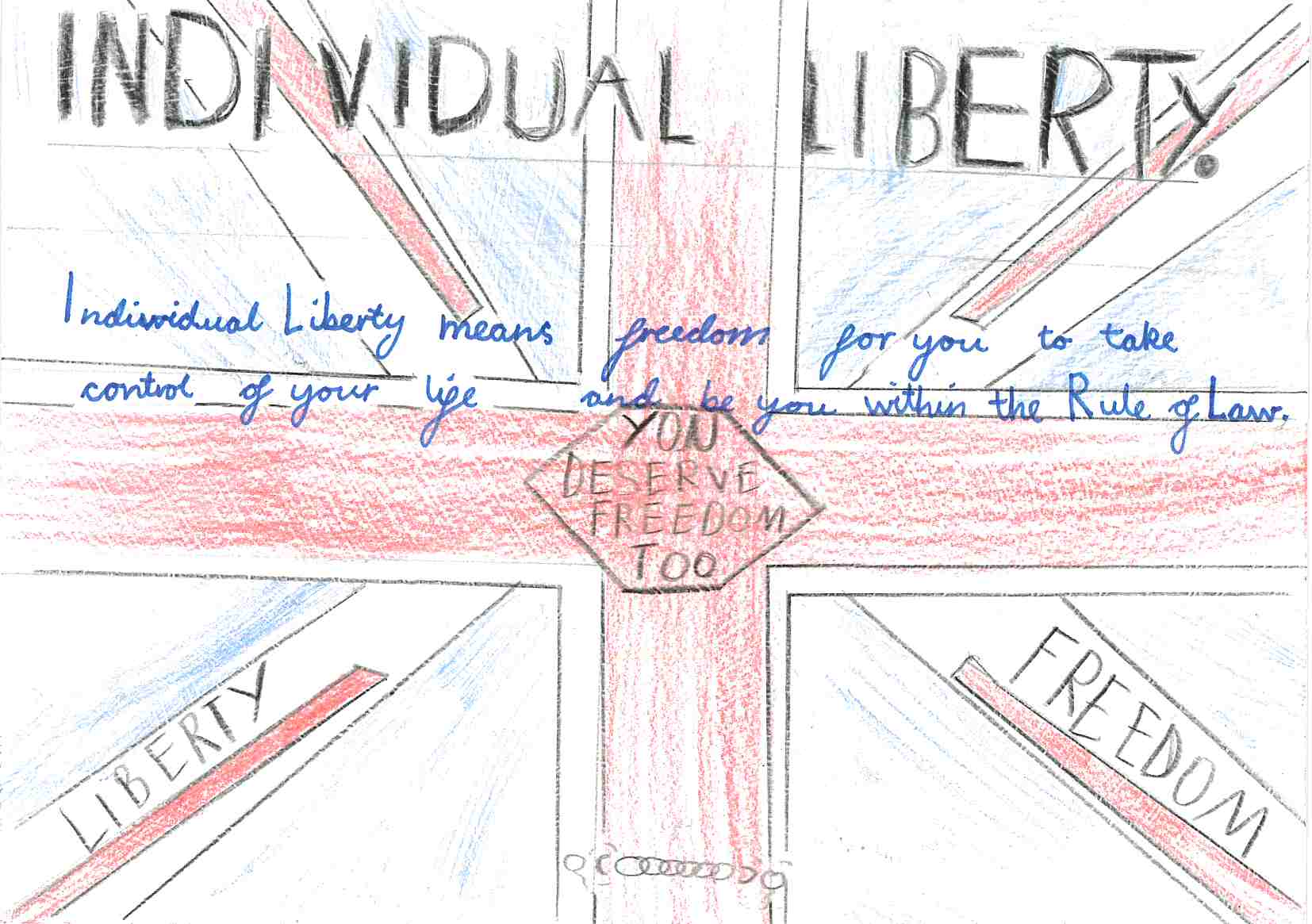
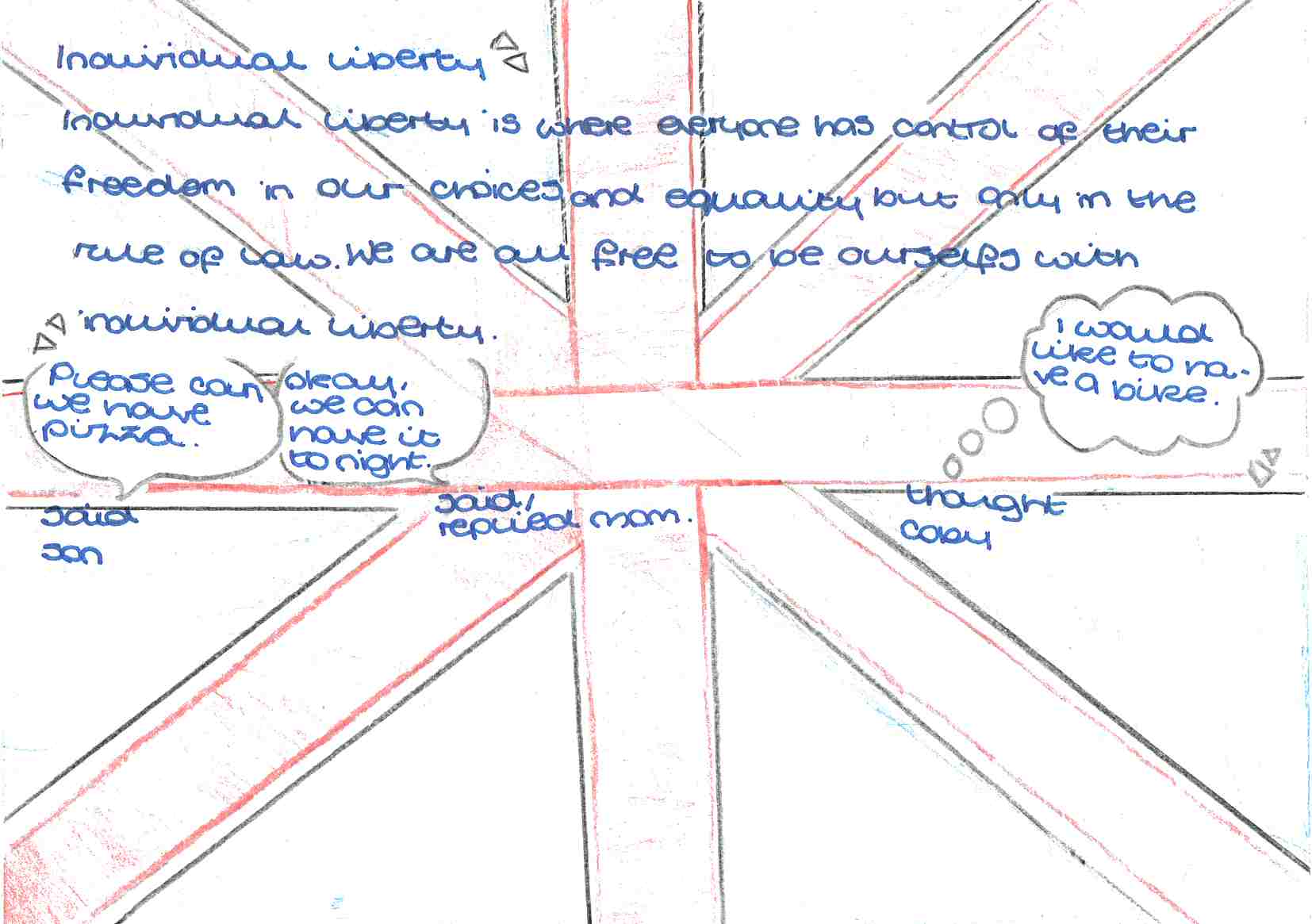
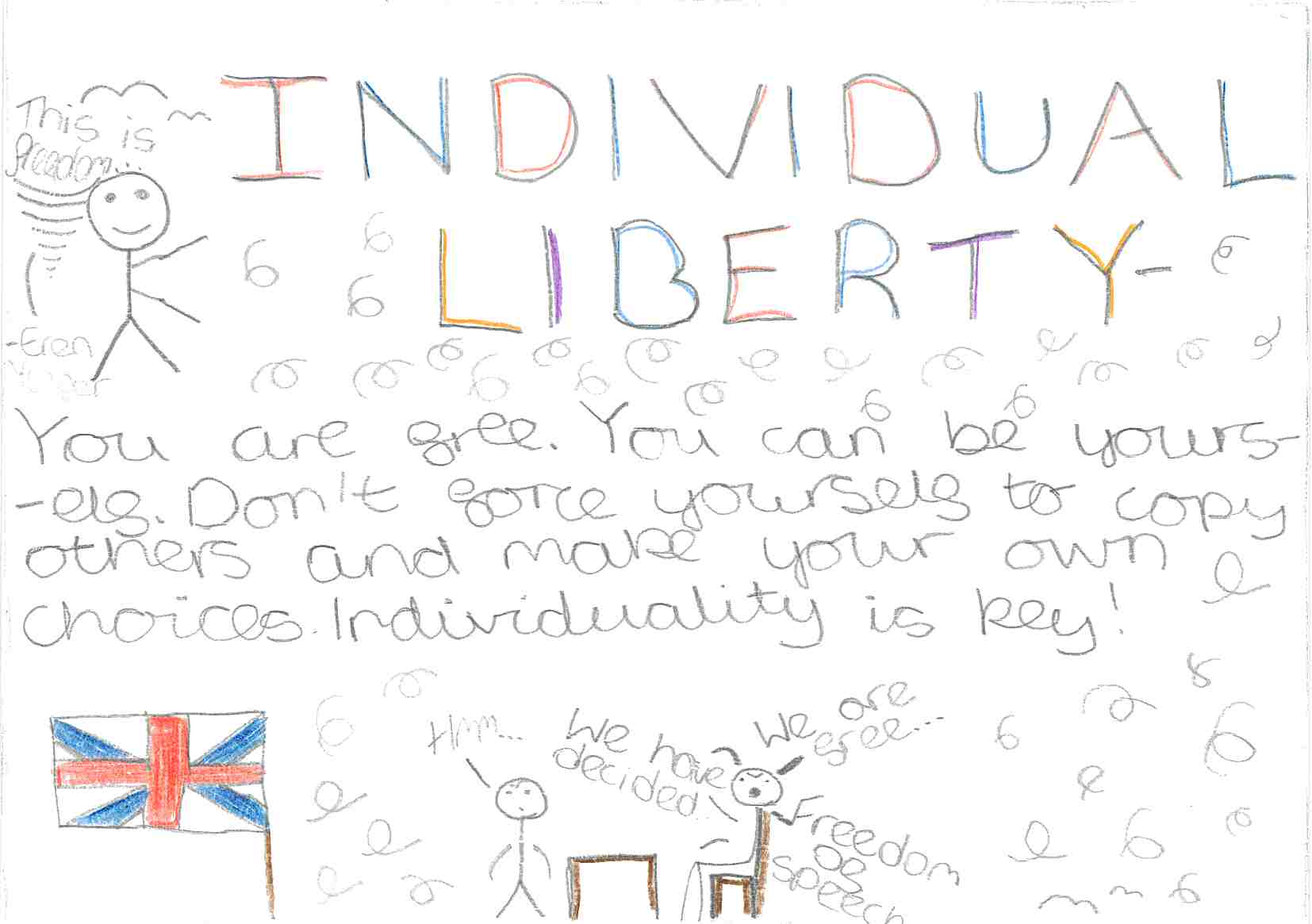
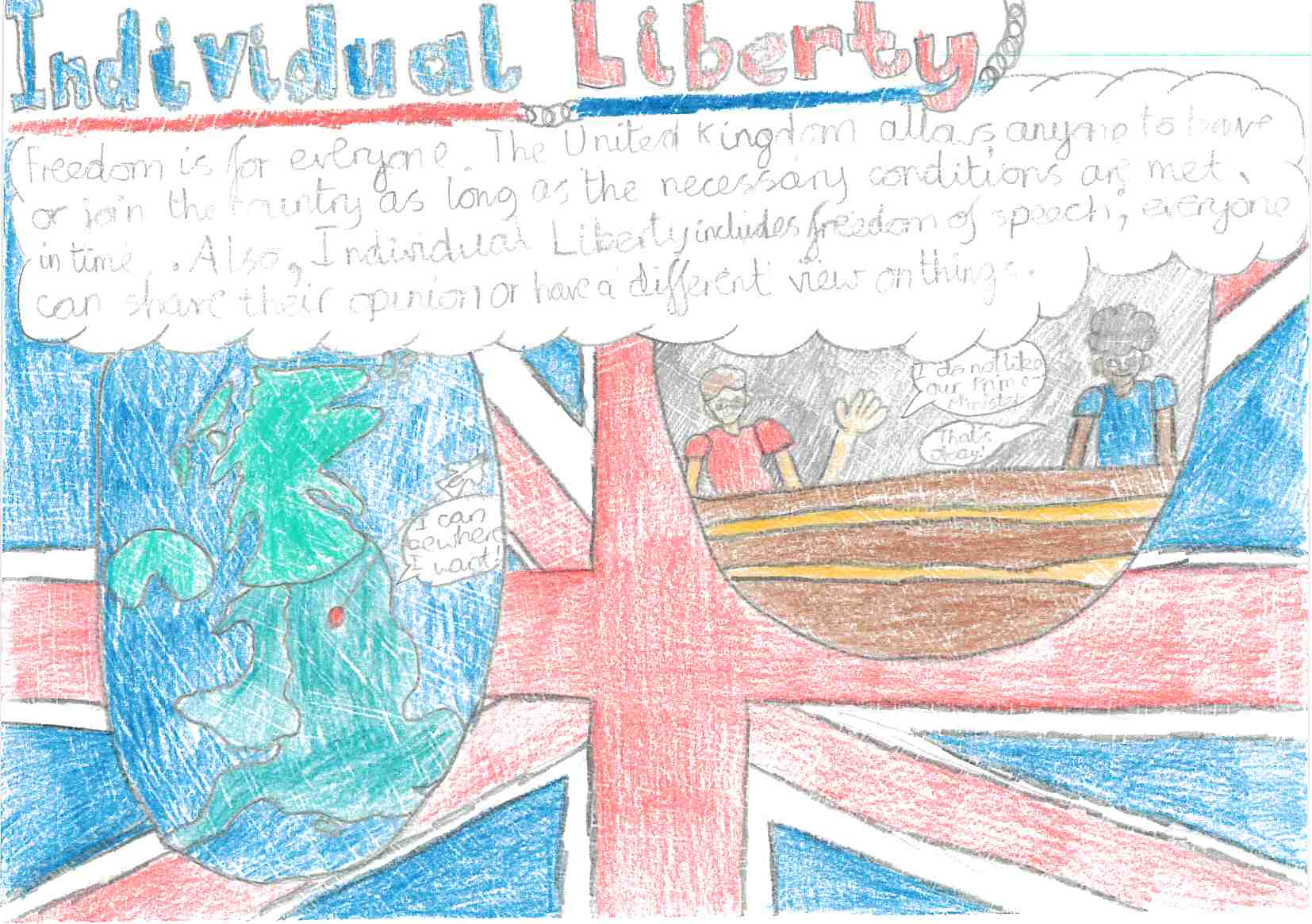
Individual liberty
Children are expected to take responsibility for their own actions and to understand the consequence their actions might have. Children are actively encouraged to make the right choices. We educate and provide boundaries for children to enable them to make informed choices, through a safe and supportive environment. The understanding of rights and responsibilities are promoted through the teaching of PSHE and e-safety. Within the school community all pupils are given the freedom to make choices, this may be about the way they wish to present their work, how they can improve their learning, involvement in home learning , choices about clubs and activities they wish to engage in. Within school, pupils are actively encouraged to make choices, knowing that they are in a safe and supportive environment. World of Work events help inspire children to consider future career choices and meet people from a range of backgrounds. There are numerous visits planned to help inspire pupils to broaden their horizons.
Children are encouraged to take risks and develop the confidence to ‘have a go’ and so increase the chances of experiencing success. Our pupils thrive on challenge, one of our learning values, and there is high participation in our extracurricular clubs and opportunities. Assemblies are used to both explore and support the school’s values. By teaching the children how to manage and understand emotions they will be motivated and equipped to: be effective and successful learners, make and sustain friendships and deal with and resolve conflict evenly and fairly. Children in Year 6 are given key roles and responsibilities such as Play leaders and YR Buddies.
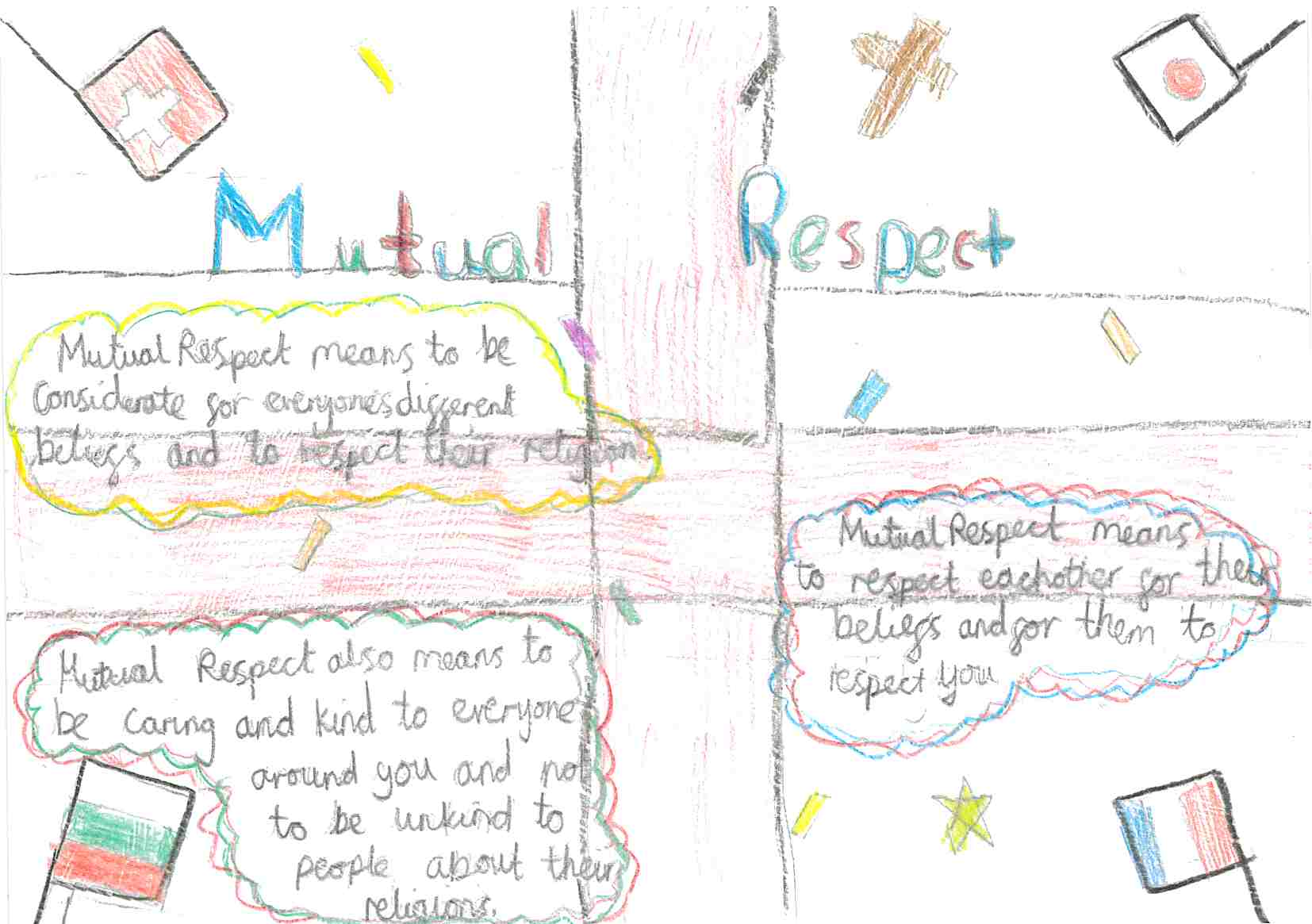
Mutual Respect
This is a core value at St Mary Bourne Primary School. We have high expectations of achievement and behaviour. Children and staff are polite and kind. Through discussion in class and whole school assemblies children learn what this means and that their behaviours have an effect on their own rights and those of others. Additional support is provided for individual pupils, through our Emotional Literacy Support (ELSA) trained member of staff. This support helps to develop self-esteem and to practise strategies pupils can employ to help improve their respect of others. All members of the school community are expected to treat each other with respect. We teach the children that conflict will be dealt with calmly and fairly. All members of the school family are valued equally.
Teachers plan exciting, interesting, challenging and innovative lessons where everybody is expected to do their best and respect others. When our older children are given key roles and responsibilities to work alongside younger children this helps to promote mutual respect across the age phases.
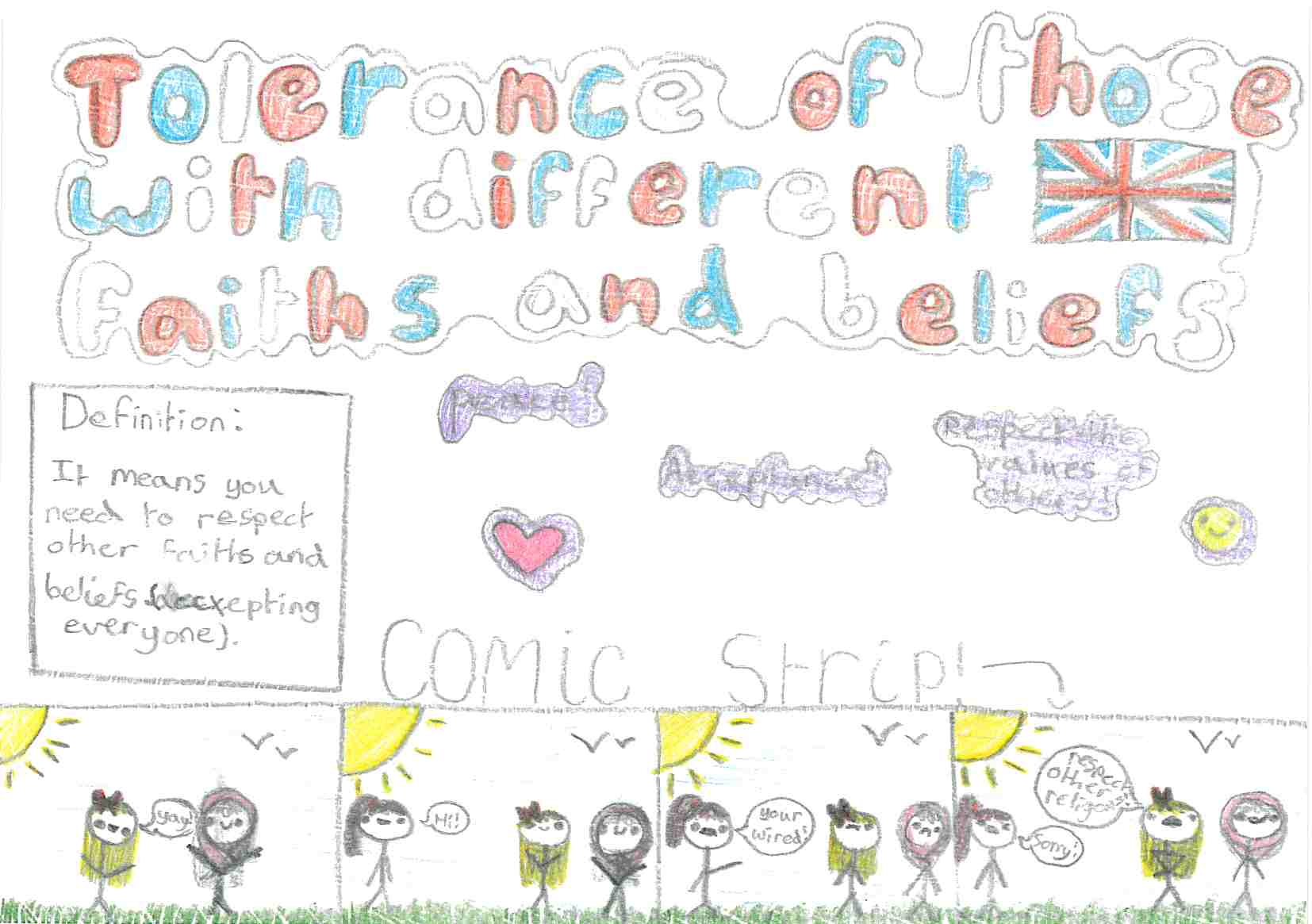
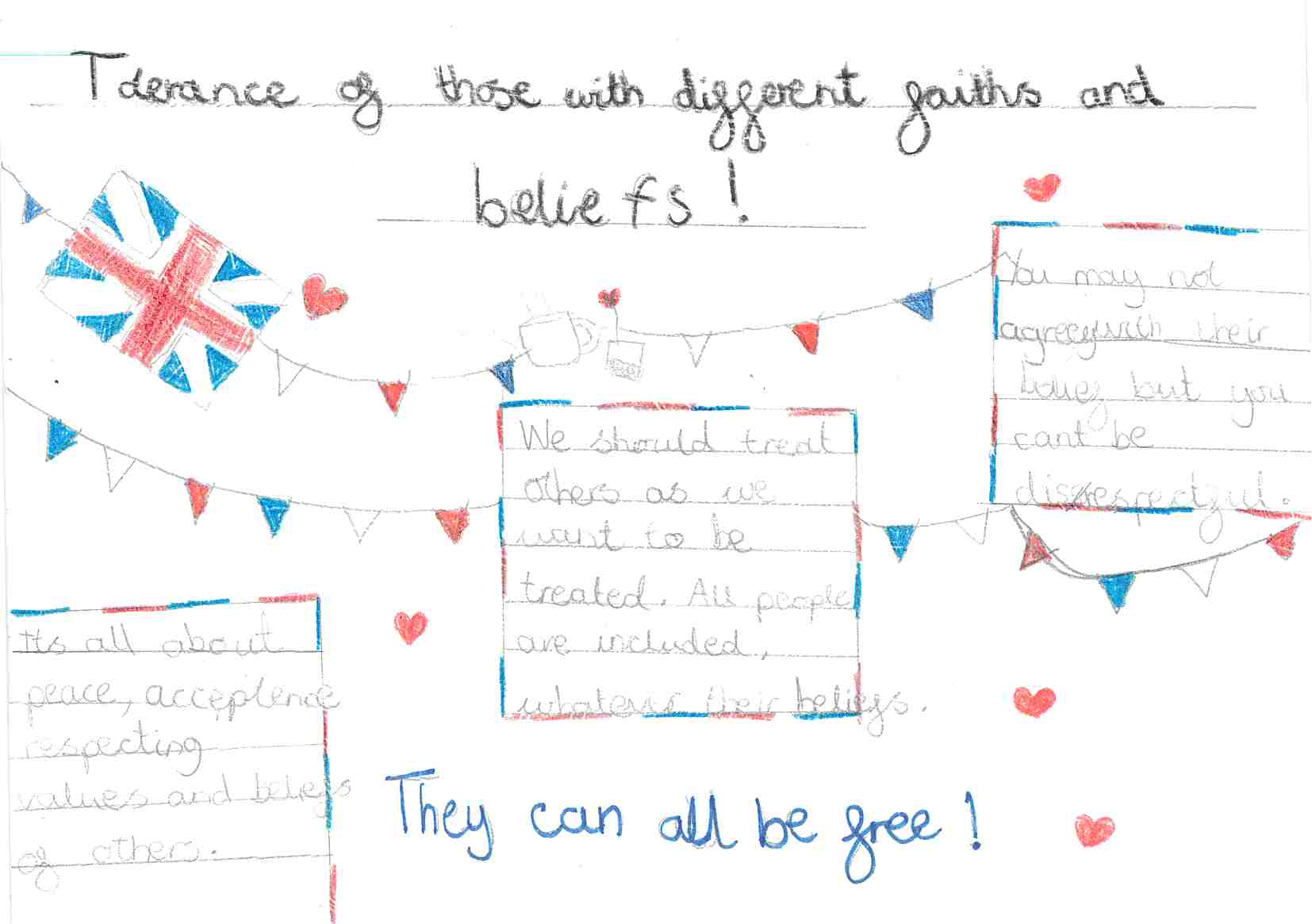
Tolerance of those of Different Faiths and Beliefs
This is achieved through enhancing pupils’ understanding of their place in a culturally diverse society and by providing opportunities to experience such diversity. Assemblies and discussions involving prejudices and prejudice-based bullying have been followed and supported by learning in RE and PSHE. Members of different faiths or religions are invited into school to share their knowledge to enhance learning within classes and the school. The school is a community school, but has strong links with the local church who lead the school assembly once a week. Tolerance, politeness and mutual respect are at the heart of our approach and R.E curriculum. All members of the school community are encouraged to treat each other with respect. Specific examples of how we enhance pupils’ understanding and respect for different faiths and beliefs are: Through Religious Education, PSHE and other lessons where we develop awareness and appreciation of other cultures – in English through fiction and in art and music by considering cultures from other parts of the world. Cultural differences are celebrated through assemblies, themed weeks and displays. Activities within school support both children and adults of different or no faith, the children are taught respect and tolerance of these groups and the opinions of the groups are taken into account with all activities. Whilst instances contrary to our values are relatively rare, each is treated seriously in line with our policies and expectations.
The Curriculum
Staff regularly review the curriculum to ensure that it promotes the areas above. It also ensures that pupils are taught about key events and figures in history. Events during the year celebrate culturally diverse occasions and memorable events taking place in the country. At St Mary Bourne School we will actively challenge children, staff or parents who express opinions that are contrary to fundamental British values including extremists views.
The school does, though a wide range of activities, secure such standards and uses strategies within the National Curriculum and beyond to secure such outcomes for children. In our school these values have always been taught through the school’s curriculum which has a strong emphasis on pupil’s personal developmental Learning (PDL). PDL is a holistic term which includes:
• Personal, social, health and economic education
• Citizenship
• Education for sustainable development
• Physical Education (PE)
• Religious education (RE)
The following is not designed to be exhaustive, but provides a list of different actions that we take as a school:
Learning Journey:
Our curriculum helps pupils develop the skill base required to access/share information, make/express decisions and apply themselves to society and the world. These include the understanding and use of money, effective writing and reading skills, collaborative work, to discuss and research ideas and concepts, and gain a broad and balanced understanding of the society in which they live. Aspects of study beyond core skills include historical and geographical context of the United Kingdom, incorporating local and national evolution, as well as international comparisons. The School is one of a few primary schools that hold the British Council’s International Schools Award. The School has long standing partnerships with Makonzi School in Uganda which has seen visits by St Mary Bourne staff, governors and pupils and reciprocal visits by the Uganda Head teacher and Deputy Headteacher. The school has also established links with a school in France. We have exchanged work and collaborated with the school on a number of whole school shared projects.
The school makes the best use of opportunities as they arise, for pupils to learn about events in the past which have shaped the future. Special assemblies within school to mark Remembrance Day annually are given by both school staff and visiting church leaders and all pupils are aware of the importance of this commemoration.
Across all Key Stages, pupils undertake a range of history topics about the development of Britain through different periods. These include understanding how technology has changed throughout periods, British monarchs, the effect of the Romans in Britain and how the Anglo-Saxon period affected change within the country. These topics are alongside opportunities to study aspects throughout British history which extend pupils’ knowledge of themes.
As a whole school, we have celebrated both the Olympics and Paralympics, with themed sports days, competitions between pupils within school as well as with other schools in the local area.
Whole school daily acts of collective worship/assembly:
The sharing of stories, images, events, music and expectations that, with clarity and precision, promote the values expressed. Such proceedings vary in the methodology of delivery in order to secure interest and understanding and are designed to impact on children regardless of knowledge, experience or cognitive maturity. As a community school, collective worship is nondenominational and recognises that those attending may have a wide range of faiths, or none. It is however, in line with regulation and is “wholly or mainly of a broadly Christian character”.
Religious Education:
Gaining a greater understanding of religious diversity and practices, which cover key religions represented in the UK is embedded in our RE lessons. We follow the Hampshire Agreed syllabus ‘Living Difference’ for RE and use 1decision materials to enhance PSHE teaching.
Physical Education:
The promotion of the concept of ‘fair play’, following and developing rules, inclusion, celebrating and rewarding success, being magnanimous in defeat and participation in activities that promote kinship and affiliation with others is important. Through the development of our PE curriculum, pupils have opportunities to participate in a huge range of sporting activities and our pupils experience success in competitive sports to a far greater degree than is normal for a school of our size. There are many opportunities for all pupils throughout their time in school, to participate in competitions and events which promote these values. For example, Cross country, cricket, football, Tag rugby and netball. All pupils participate in a range of physical and athletic activities within sports days, as well as local athletic meets.